Decline in African Elephant Populations
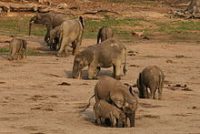
For many decades, statistics have shown a significant decline in African elephant populations due to a lack of regulation. Governmental corruption and political instability in Sub-Saharan African countries allowed the ivory trade to occur for centuries. Lack of regulation contributed to the continuous degradation and exploitation of natural resources. The current decrease in elephant populations is primarily due to illegal poaching, demand for Ivory products, and factors associated with human population growth. Curbing illegal poaching of elephants for ivory depends on a decrease in the demand for such priceless products. Secondary causes of population decrease include habitat fragmentation, as well as the alteration of age and genetic distribution within existing elephant populations. This issue has severe ecological repercussions, as African elephants are keystone species within the the continent’s landscapes.

Yasuní-ITT Project in Ecuador
The Yasuni-ITT Initiative aimed to prevent drilling in the Ishpingo-Tambococha-Tiputini oil field in Ecuador. This would protect biodiversity, maintain indigenous peoples’ rights, and eliminate 400 million tons of CO2 emissions. The Yasuni-ITT proposed that the global community contribute roughly $350 million annually for ten years to fund employment in sectors such as renewable energy, while respecting biodiversity and social equality. In return, Ecuador would provide ‘Yasuni Guarantee Certificates’ corresponding to the avoided CO2 emissions, which could be used on the European Union’s carbon credits market. This model introduced a global method of jointly managing environmental costs, however studies indicated that the international community was unlikely to financially support communities wishing to strand local assets for global benefit. The Yasuní-ITT Initiative ended in 2013 when it was found economically unable to follow through on its plan.
Pesticide Poisoning
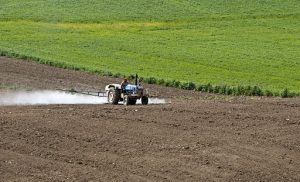
While in the short run, pesticides seem very beneficial for agriculture including crop life and dealing with unwanted or invading vegetation, after closer inspection at the effects on plant, animal, and human life, it becomes very clear that the negative effects such as extreme illness or death, heavily outweigh the positive effects. Pesticides are very common in agriculture today, most commonly used to protect crops from widespread disease and pests. As a result, humans have enjoyed the benefits a healthy crops with and lack of poor harvesting seasons. When humans started farming in Mesopotamia 10,000 years ago pesticides were not commonly used. The first evidence of pesticide use was about 4,500 years ago by the Sumerians and 3,200 years ago in China
Monsanto and Terminator Seeds
Monsanto is a corporation which specializes in creating GMO (genetically modified organism) technology and genetically altering seeds, especially soy, to improve the crop yield. Their “terminator seeds” are modified to only last one generation to ensure that farmers have to annually purchase new seeds from the organization. This method poses an environmental concern being that it significantly reduces crop diversity and introduces many GMOs into the earth.
Grizzly Bear Conservation in BC
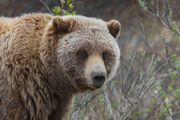
Grizzly bears (Ursus arctos) are a major representative of the wild. Grizzly bears usually weigh 136-680 kilograms and the males are usually larger in size. They belong to the same family as polar bears and black bears. The correct scientific name is brown bear, however, they are referred as grizzlies due to distinct lighter colour hair on their back which gives them “grizzled” appearance. Grizzly bears have a hump on their shoulders. This is due to their mass of muscle which is specifically designed for digging. It is easy to distinguish black bears and grizzlies by looking at their faces: black bears have straight-faced profile while grizzlies have a dished-face profile. In the colour range, Grizzlies are usually dark brown, but can vary from light cream colour to black which is mainly affected by their genetics. In addition, grizzlies have relatively longer claws than other species of bears, designed for digging. Grizzlies can adapt to cold environment with the help of their thick fur. Also, their long claws and powerful shoulders help them create winter dens and scavenge for food.
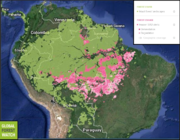
Illegal Logging in Brazil
Illegal logging in the Brazilian Amazon is a problem that deals not only with the environment, but also with various economic, social, and political pressures. Illegal logging that leads to deforestation is an issue that extends to local, national, and international levels. This page will describe the background of illegal logging in Brazil, its effect on the environment and economy, and the actors that affect it and are influenced by it.
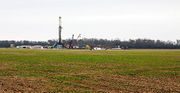
Hydraulic Fracturing
Since the Industrial Revolution, world energy consumption, traditionally supplied by combustible organic material, such as oil, coal, or natural gas, has rapidly increased. As conventional sources of fossil fuels are depleted, hydraulic fracturing (“fracking”), a controversial method of extracting natural gas, has become a popular unconventional approach to fossil fuel extraction.
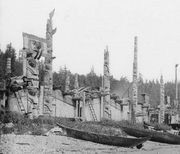
Gwaii Haanas National Park Preserve
Gwaii Haanas Park reserve and Haida Heritage site is an archipelago of 138 islands that lies 130km off the coast of mainland British Columbia; known simply as Gwaii Haanas, this area is protected as both a National Park reserve and an important Heritage site for the Haida First Nation. The islands are a very popular tourist destination due to the large temperate rainforests that house a vast diversity of animals. The Haida First Nation have a rich history on Gwaii Haanas, ranging back over 12,000 years, and even have a UNESCO World Heritage Site at one of the village sites on the islands.
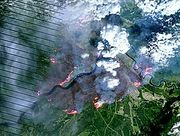
Fort McMurray and the Fires of Climate Change
Fort McMurray, located in a beautiful service area with vast oil sands deposit in northeast of Alberta, is surrounded by peatlands and boreal forests of aspen and spruce. Though normally very wet, Fort McMurray is relative dry and hot in summer, and its weather is becoming more extreme because of climate change. With a low moisture content and a high volume of resin for defence against disease, stems of trees in boreal forests are highly flammable. Beginning southwest of Fort McMurray, Alberta on May 1st, 2016, the wildfire swept through forests and communities and destroyed around 2,400 buildings in only two days, resulting in over 8,000 residents to leave their homes. Ultimately, it was under control by July 5th, 2016. The fire, reported spreading cross 590,000 hectares, is the costliest disaster in Canadian history. The intense forest fire has a profound impact on local environment and ecology. About 500 species of wildlife lost their habitats or were in danger due to the fire. Many wastes such as ash and rotting food were produced in the burning process. The fire also released a large amount of CO2 and other toxic contaminants including heavy metals and PAHs deposited on trees and soils.
Ecological and Social Costs of Cotton Farming
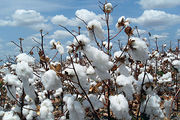
In today’s age, cotton is one of the most versatile crops that the earth has to offer. Many of us are familiar with the usage of clothing in cotton, but cotton is also used in beauty products and food products as well. Look at the clothes that you are wearing right now, a majority; if not all of it is made out of cotton material. Cotton is favorable in clothing because of its softness, durability, and insulation characteristics. The leftover cotton seed can be used to make cottonseed oil and cotton meal. The oil can be used in cooking, such as deep frying foods or used in salads as a dressing. If not used in cooking, cottonseed oil can also be used to make tons of oil-based products such as soap, candles, or even cosmetics. Cotton meal is rich in protein and is used for human consumption or for animal fodder. These cotton products and byproducts are used by people all around the world, the amount of cotton consumed must be insane! The growth of cotton takes up approximately 2.5 percent of the world’s cultivatable land across 85 different countries. During the year of 2015 to 2016, the world consumed a staggering amount of 24.2 million metric tons of cotton. This includes uses of cotton in all its forms. However, with the good comes the bad and although cotton has a ton of benefits, it also carries many social and environmental drawbacks.